

Which Type of Air Conditioner is Best for Homes in Qatar?
If you’ve spent even a single summer in Qatar, you don’t need convincing that air conditioning isn’t just a luxury—it’s survival gear. Step outside in July and you’ll feel like you’ve walked into an oven. For families, an AC unit isn’t a nice-to-have appliance; it’s the heartbeat of daily life. The tricky part, though, is figuring out which type actually makes sense for your home. Between split systems, window units, central ducted setups, and the newer inverter or solar-powered options, the choices can feel like alphabet soup.
The “best” AC isn’t the same for everyone—it depends on how big your home is, what you’re willing to spend, and how you balance upfront cost with long-term savings. A small flat has very different needs compared to a sprawling villa in Al Wakrah.
Things to Think About Before Buying
Before you get swept up by flashy ads or a salesman’s pitch, a couple of basics are worth keeping in mind:
Room size and cooling capacity. AC power is measured in tons. A bedroom may be fine with a 1-ton unit, but a main living room probably needs 2 tons or more.
Energy efficiency. Electricity bills climb quickly here, especially when your AC runs nearly year-round. An efficient model can make a big difference.
Installation and maintenance. Some systems cost more to set up, others need regular servicing, and not all are equally easy to repair.
Budget. No surprise—this is usually the deciding factor. Now, let’s look at what’s actually out there.
Split Air Conditioners
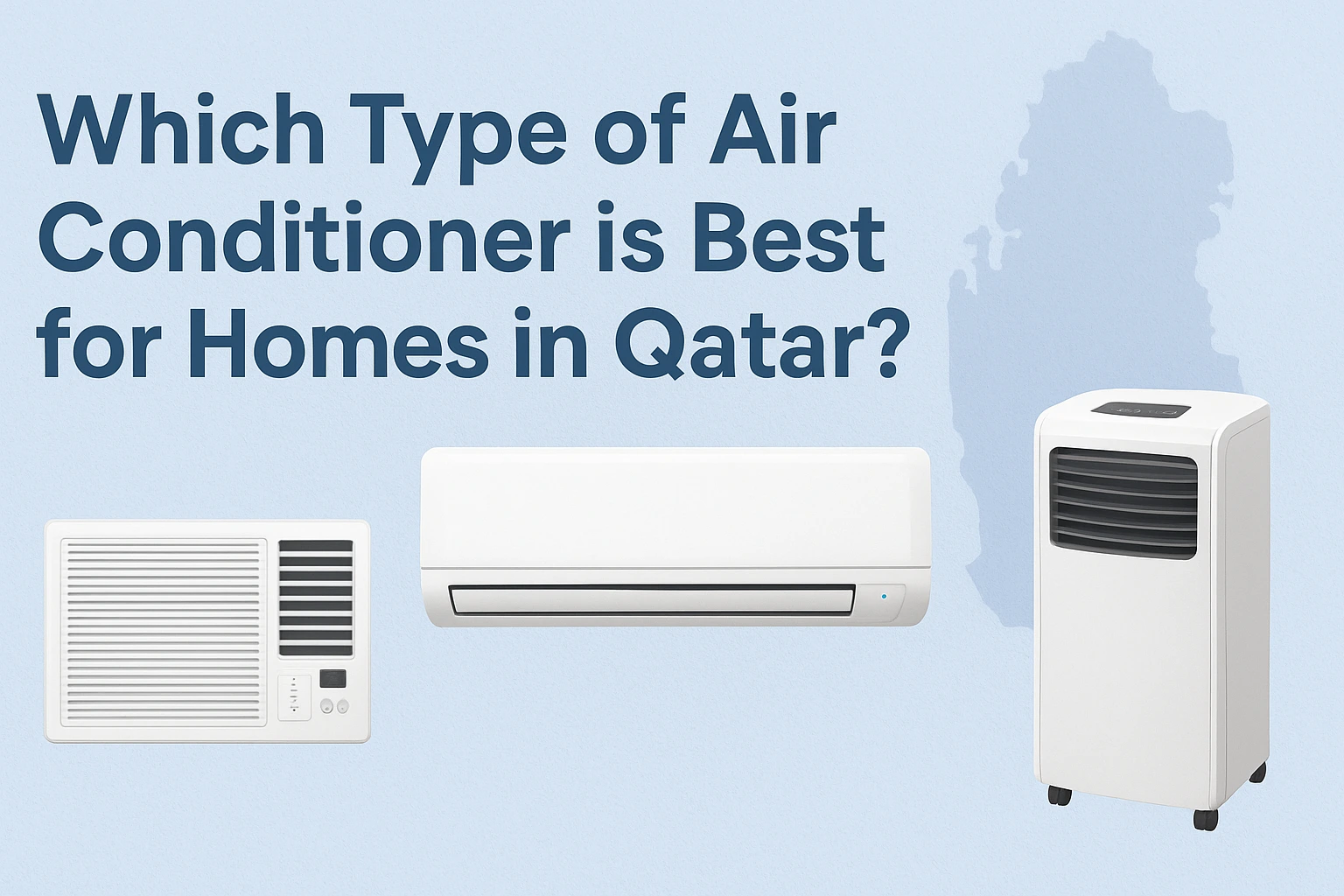
Probably the most popular choice in Qatar, and for good reason. They come with an indoor unit that blows cool air and an outdoor unit that handles the heavy lifting. Splits are quiet, efficient, and can cool a room quickly without burning through electricity. Yes, installation costs more compared to a window AC, but most homeowners see that as money well spent. For bedrooms, living rooms, or even small apartments, a split AC is a dependable pick.
Window Air Conditioners
These are the old-school box-shaped units that either sit in a window or slot into the wall. They’re cheap and easy to install—that’s the main selling point. But they tend to be noisy and not nearly as efficient as modern systems. They still have their place, though: student housing, small rental spaces, or short-term living arrangements. For a permanent family home, most people upgrade to something quieter and more efficient.
Central (Ducted) AC
If you live in a villa, you’ve probably considered central air. It’s convenient: one system cools the entire home, and you don’t have clunky units hanging off the walls. But it’s not a small investment. The installation is costly, maintenance is more involved, and the electricity bill is usually higher. That said, for larger homes where comfort and aesthetics matter, central AC remains the go-to.
Inverter ACs
Think of these as the smarter cousin of the standard split unit. Instead of constantly turning on and off, the compressor adjusts its speed depending on how much cooling is needed. The result? Less noise, lower electricity usage, and smoother temperature control. The catch is the price tag—they cost more upfront. But in a country like Qatar, where your AC works overtime almost the entire year, the savings over time can be significant.
Solar Air Conditioners
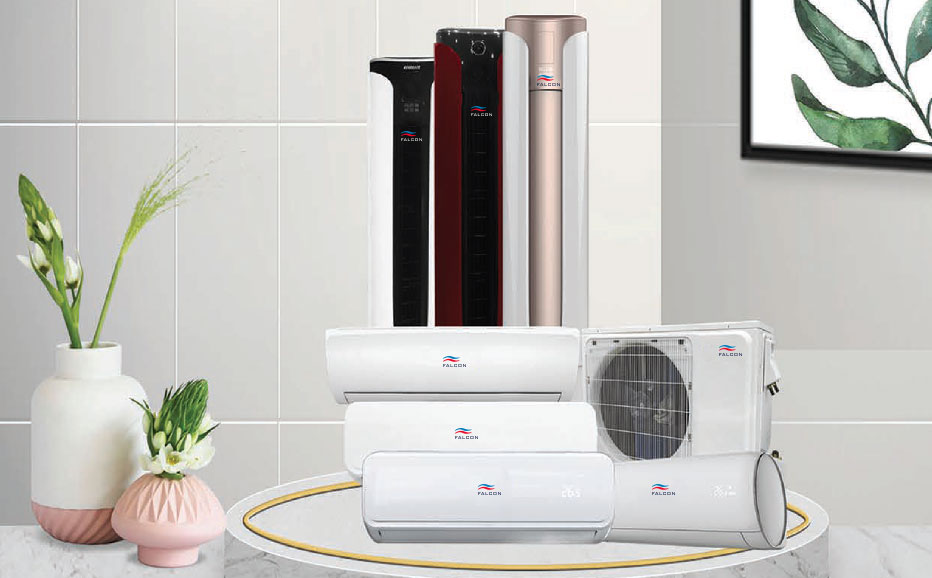
On paper, they sound like the dream solution—free energy from the blazing sun. In reality, solar-powered ACs are still something of a mixed bag. The setup is expensive, they require panels and space, and performance isn’t always as consistent as a traditional system. Maintenance can be another headache. Some brands, like Falcon, do offer solar models, and for eco-friendly buyers they might be worth a look. But for everyday, whole-house cooling, they’re not yet the most practical choice.
So, What are the Best Options ?
For most families in Qatar, split and inverter units hit the sweet spot: reliable cooling, reasonable energy use, and long-term value. Central AC makes sense if you’re living in a big villa and can afford the hefty price tag, but for anyone just needing a quick, cheap way to cool down, a window unit still does the job. Solar ACs are promising, but for now they’re better suited to niche situations than as the main system for a household.
Common FAQs
Which AC’s are more energy-efficient?
Inverter units usually take the crown—they adapt to the room’s needs instead of running at full blast all the time.
How many tons of AC do I need for a bedroom?
Typically 1 to 1.5 tons, depending on room size and how much direct sunlight it gets.
Is solar AC better than inverter AC?
Not quite. While solar can cut grid usage, inverter models tend to be more practical and easier to maintain.
How often should I service my AC in Qatar?
At least twice a year. The desert dust doesn’t do your filters any favors.
Final Thoughts
Choosing the right AC here isn’t about the flashiest features or the newest tech—it’s about matching the system to your lifestyle and home. If in doubt, most people are safe with a split or inverter. Villas may call for central AC, while window units keep things simple for smaller spaces. And solar? It’s an intriguing option, but not quite the everyday solution yet.
At the end of the day, comfort in Qatar’s heat isn’t negotiable, so whatever you choose, make sure it’s a system you won’t regret when the mercury climbs past 45°C.
![Top 5 Best Air Conditioners in Qatar [2025 Guide]](https://falconaircondition.com/wp-content/uploads/2025/05/Top-Air-Conditioners-for-Qatar-2025-100x100.webp)


We are one of the Best International Air Conditioning System, bringing you the best air conditioning services, and the industry’s leading technology to create reliable, efficient heating, cooling, and air quality solutions.
Need Help?

Saturday – Thursday: 8:00-20:00
Friday – Closed